What Is an Intuitive Tarot Reading? How My Readings Actually Work
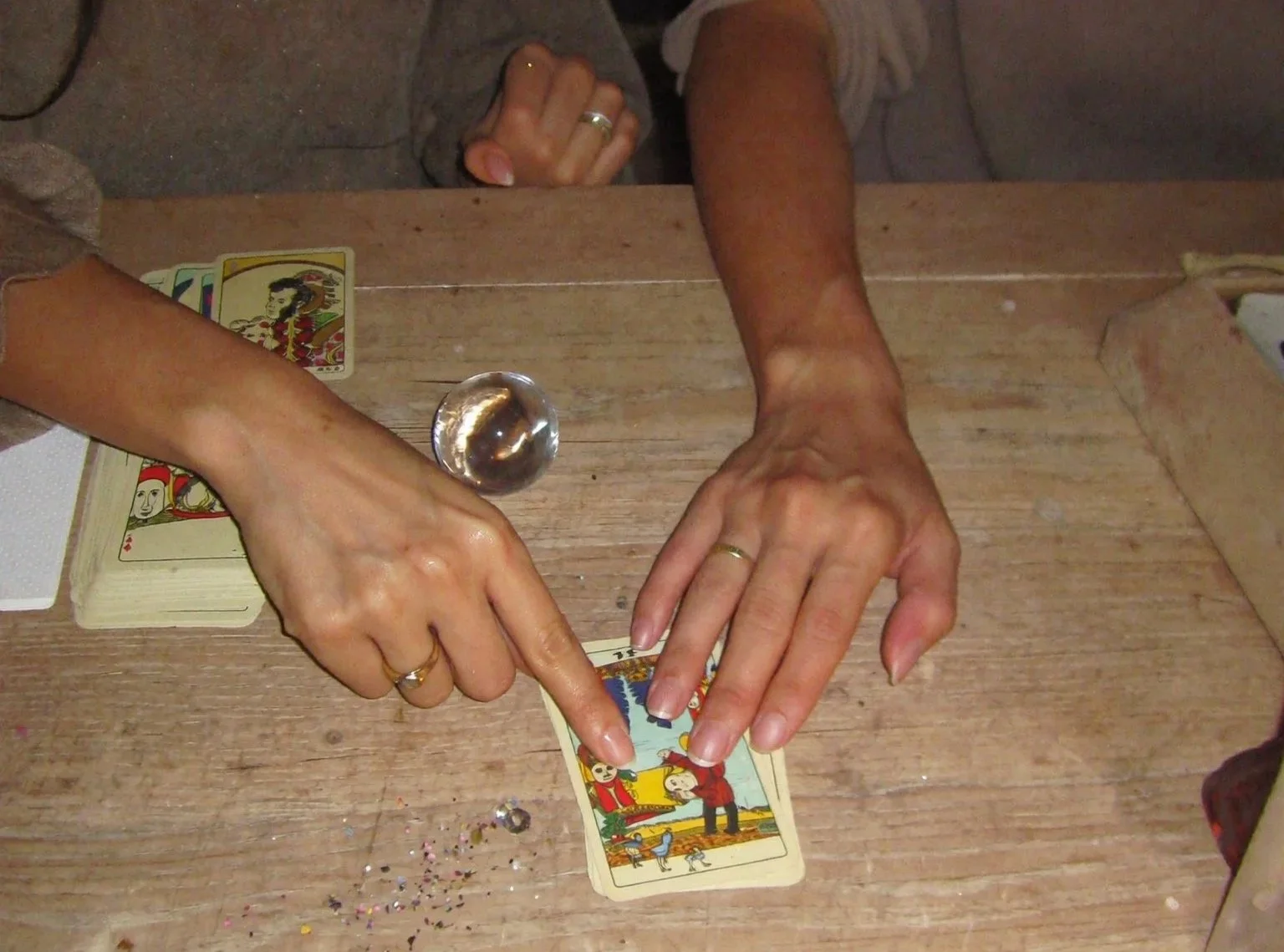
Anyone can purchase a Tarot deck, pull the Two of Cups, consult the little white booklet, and announce that love is coming. It's a perfectly respectable way to begin learning Tarot. It's considerably less impressive when someone is charging you for the privilege of hearing them recite what you could have looked up yourself.
The real work begins when that same card appears in a complicated relationship reading, surrounded by indications of avoidance, instability, and conflicting intentions. Suddenly, "partnership" isn't a particularly sufficient explanation. Does the card represent mutual affection? A desire for reconciliation? An emotional connection that exists despite the relationship's practical limitations? Or is it revealing something about the client's expectations rather than the other person's willingness to participate?
These are the distinctions that make a reading useful, and they require considerably more than memorizing seventy-eight card definitions. An intuitive Tarot reading combines the traditional symbolism of Tarot with the reader's intuitive perceptions, the specific question being examined, and the relationships between cards within a spread. Rather than interpreting each card through a fixed definition, the reader considers how its meaning develops within the context of the situation.
That's the general explanation. My approach goes considerably further.
I've worked professionally as a psychic and Tarot reader for more than 25 years. Throughout that time, Tarot has become an established part of my intuitive language, but it has never been the sole source of information I work with.
My natural psychic abilities, particularly claircognizance, are foundational to how I perceive and interpret the circumstances people bring to me. Tarot provides an additional framework for examining those impressions, recognizing patterns, and exploring the influences surrounding a question.
I don't need the cards to tell me everything, nor do I expect them to function independently of the information I'm receiving intuitively. The distinction is important because my readings aren't simply interpretations of Tarot cards. They're psychic readings informed, expanded, and sometimes challenged by what emerges through the Tarot. Understanding how those elements work together will give you a clearer picture of what makes an intuitive Tarot reading different and what you can expect when working with me.
Tarot Card Meanings Are a Vocabulary, Not the Whole Conversation
Tarot is a symbolic system with an established structure, traditional associations, and imagery that provides a foundation for interpretation.
The Major Arcana generally represents significant themes, transitions, lessons, and developments. The Minor Arcana explores the circumstances, behaviors, emotional experiences, and practical dynamics that shape everyday life.
Within those categories, individual suits, numbers, archetypes, and visual symbols contribute additional layers of meaning. Learning these associations is an important part of developing proficiency with Tarot. You need to understand the language before you can begin interpreting what it's communicating.
But knowing a language and understanding a conversation aren't the same thing.
A Tarot card doesn't appear in isolation during a reading. It appears in response to a particular question, within a specific position, and often alongside several other cards that influence its significance. A card traditionally associated with emotional fulfillment may take on an entirely different meaning when it appears in the position of an obstacle rather than an emerging outcome.
Likewise, a card suggesting commitment or partnership cannot reasonably be interpreted without considering whether the surrounding cards support that possibility or introduce significant complications. This is where experience and intuitive interpretation become especially important.
A reader who treats each card as an independent definition may identify the individual themes accurately while missing the relationship between them. They can tell you what the cards mean without necessarily understanding what the spread is saying. And in a complicated relationship reading, that distinction can be substantial.
I'm not suggesting that traditional Tarot readers lack skill or that established symbolism is somehow irrelevant. There are accomplished practitioners who work primarily through conventional Tarot systems and provide thoughtful, detailed interpretations.
My methodology is different because I don't regard those conventional meanings as the final authority on what I'm receiving. After more than 25 years of working with Tarot, its symbolism is familiar enough that I don't need to consciously translate every card into a list of predetermined keywords.
I understand the associations, but I'm also examining the intuitive information emerging alongside them. The cards are part of the conversation. They aren't the entire conversation. And if all I intended to do was recite the accompanying booklet, I'd have considerably more free time and you'd have a very expensive explanation of something you could have Googled.
How I Read Tarot After More Than 25 Years
Every reading begins with an intention and a question. Sometimes that question is straightforward: Will my ex return? Is this person interested in a committed relationship? What are the likely developments surrounding a career opportunity? Other inquiries involve complicated relationship histories, recurring patterns, or circumstances in which several influences need to be examined together. I establish the focus of the reading and work intuitively with the situation being presented.
My primary psychic ability is claircognizance, commonly described as clear knowing. It's the way I experience information arriving as an immediate understanding rather than through a deliberate process of reasoning or interpretation.
That information may concern the dynamics surrounding a relationship, the influences affecting a particular situation, or possibilities that appear relevant to the question. Sometimes an intuitive impression emerges before I've selected a card. Other times, a card or combination of cards brings additional information into focus.
When I'm working with Tarot, I consider the traditional symbolism, the position of each card, the relationships between surrounding cards, and the intuitive information I'm receiving throughout the process. Those elements don't operate independently. They inform one another as the interpretation develops.
There may be a particular card that immediately draws my attention, even when another position would conventionally be considered more significant. I may recognize a recurring theme, an inconsistency between what a client hopes is happening and what the spread suggests, or an influence that becomes apparent through the relationship between several cards.
Occasionally, the information emerging intuitively extends beyond what someone familiar with the cards might expect from their traditional meanings.
That's part of the work.
I'm not attempting to make the cards fit a predetermined interpretation. I'm examining the relationship between the cards, the circumstances, and what I'm receiving psychically to understand the situation as comprehensively as possible.
After decades of working with clients, particularly around relationships, I've also developed a considerable understanding of the patterns that repeatedly emerge when people become emotionally invested in circumstances they struggle to evaluate objectively.
That experience informs how I contextualize the information.
For example, there's a meaningful difference between recognizing that someone has genuine romantic feelings and determining whether they're prepared to participate in a committed relationship. An inexperienced interpretation might treat evidence of affection as confirmation that reconciliation or commitment is inevitable.
I want to examine the influences surrounding those feelings, the person's potential intentions, the obstacles affecting the connection, and whether the broader reading supports the development the client is hoping for. Someone can love you and still be entirely unwilling to do what a healthy relationship requires. The information becomes considerably more valuable when those distinctions are recognized rather than conveniently overlooked.
Why I don't separate the cards from the actual question
One of the most important aspects of my methodology is that the question establishes the context for the entire reading.
Consider two inquiries about the same romantic connection. The first asks, "Does this person have genuine feelings for me?" The second asks, "Why do I continue becoming involved with people who aren't emotionally available?" Both questions may involve the same individual, but they're examining very different aspects of the situation.
The first directs my attention toward the energetic dynamics surrounding the connection and the other person's potential emotional investment. The second asks me to examine a recurring pattern, including the beliefs, expectations, and influences that may be contributing to the client's relationship experiences.
The interpretation needs to reflect the actual question rather than becoming an interchangeable collection of observations. This is also why I don't require clients to disguise direct questions beneath elaborate spiritual language.
If you want to know whether your ex intends to reconcile, ask me whether your ex intends to reconcile. We may discover that the more significant information involves why the relationship ended, what circumstances are influencing the possibility of renewed contact, or whether reconciliation would represent a meaningful change in the connection.
But we'll begin with the question you actually want answered. I don't believe that asking about another person's feelings or intentions is inherently inappropriate, nor do I insist that every reading become an exercise in examining your subconscious. Those subjects may become relevant because of what emerges during the reading. They shouldn't be imposed as substitutes for the inquiry you brought.
Why the Same Tarot Card Can Mean Different Things
One of the easiest ways to demonstrate the difference between a conventional card definition and an intuitive interpretation is to consider how the same card might function in two different readings.
Let's use the Two of Cups.
Traditionally, the Two of Cups is associated with emotional connection, mutual attraction, partnership, and reciprocal exchange. Those associations provide a foundation for understanding the card, but they don't establish precisely what it represents in every situation.
Imagine it appears in a relationship reading alongside cards suggesting openness, consistency, and a willingness to develop the connection. Within that context, the Two of Cups might reinforce an interpretation involving mutual romantic interest and the potential for a reciprocal relationship.
Now imagine that same card appears in a spread examining a relationship characterized by repeated breakups, inconsistent communication, and emotional withdrawal. Perhaps the surrounding cards include the Devil, the Seven of Swords, or the Eight of Cups. Suddenly, the interpretation requires considerably more discernment.
The Two of Cups may still suggest genuine emotional attachment, but its presence doesn't automatically resolve the difficulties indicated elsewhere in the reading. The connection may be meaningful to both people while remaining complicated by avoidance, unhealthy patterns, conflicting intentions, or an unwillingness to participate consistently.
And if the central question concerns whether the relationship can develop into a stable commitment, the existence of affection is only one part of what needs to be examined. The Two of Cups doesn't cancel out the Seven of Swords because we'd prefer a more romantic interpretation. Neither does it transform the Devil into evidence of some extraordinary cosmic bond that justifies tolerating circumstances you would otherwise recognize as unhealthy.
The cards have to be considered together. These examples are illustrative rather than descriptions of actual client readings, but they demonstrate why context matters. A card's meaning develops through the question, its position, the surrounding influences, and the intuitive information accompanying it.
And sometimes the most important information comes from recognizing what the spread isn't supporting.
A client may be hoping for confirmation that a romantic connection will become committed, yet the reading contains very little suggesting consistency, emotional accountability, or meaningful forward movement. I'm not going to manufacture those indications simply because one card suggests attraction. That would be a remarkably convenient interpretation, but convenience isn't what someone should be paying a professional psychic to provide.
What I Pay Attention to in a Spread
When examining a Tarot spread, I'm interpreting more than the individual cards. The positions within the layout are important because they establish the role each card occupies in the reading. A card representing the central issue requires a different interpretation from that same card appearing as an obstacle, an underlying influence, or a potential outcome.
I'm also looking at the relationships between cards and whether particular themes appear repeatedly. For example, a spread containing several Major Arcana cards may suggest that the situation involves significant themes, developments, or opportunities for personal transformation. Within Tarot's symbolic framework, that concentration can indicate that the circumstances deserve particular attention because the choices being made may have broader implications.
That doesn't mean fate has decided the outcome or that the client is being carried toward an unavoidable event. It means the spread is emphasizing something that warrants examination.
Likewise, the repeated appearance of cards associated with conflict, emotional withdrawal, instability, or indecision may reveal a pattern that deserves more attention than any single encouraging card. I consider the distribution of suits, the relationship between the Major and Minor Arcana, the positions of relevant court cards, and the broader narrative developing across the spread.
But I'm not performing a mechanical inventory. Those details matter because they may reinforce, complicate, or provide additional context for what I'm receiving intuitively. Sometimes I also pay attention to cards that appear unexpectedly during shuffling or a card at the bottom of the deck when it contributes meaningfully to the interpretation.
Not every detail carries equal significance in every reading. Experience involves recognizing what deserves attention rather than treating every possible association as equally important. And in relationship readings, one of the most revealing distinctions is often the difference between someone's emotional experience and their practical willingness to participate.
A person may feel strongly about a connection while simultaneously resisting intimacy, avoiding accountability, or making decisions that prevent the relationship from progressing. The spread may reflect those contradictions. My responsibility is to interpret them rather than smooth them over because the client would prefer a simpler answer.
What an Intuitive Tarot Reading Can and Cannot Tell You
An intuitive Tarot reading can offer insight into the dynamics surrounding a relationship, the influences affecting a situation, recurring patterns, potential developments, and the circumstances that may be relevant to a decision.
Through my psychic abilities and Tarot, I examine the information associated with the question and communicate the interpretation as clearly and directly as possible. That includes questions about another person's feelings, intentions, and the possibility of future developments. I don't shy away from those inquiries.
If you're wondering whether a former partner is likely to return, what may be motivating someone's inconsistent behavior, or how a romantic connection might develop, those are subjects we can explore. However, an intuitive impression isn't independently verified access to another person's private thoughts, and a potential outcome isn't a guaranteed event. That distinction matters because the information emerging through a reading concerns possibilities and influences that may change as circumstances develop.
I also don't subscribe to the notion that every intense romantic connection represents a predestined soulmate or twin flame relationship. In my experience, these terms are man-made and do not reflect any true meaning spiritually. People can experience profound attraction, emotional familiarity, or a powerful sense of recognition without being destined to spend their lives together. And a relationship can be emotionally significant without being healthy, reciprocal, or sustainable. One of the more damaging tendencies within certain spiritual communities is the insistence that a difficult relationship must be extraordinary simply because the emotional intensity is extraordinary.
Suddenly, inconsistency becomes evidence of a spiritual test. Emotional unavailability is interpreted as proof that the connection is too powerful for the other person to handle. Repeated rejection becomes a necessary stage in an elaborate divine reunion process. It's a remarkably effective way to encourage someone to remain invested in a relationship that continues offering very little of what they actually want. I have no interest in perpetuating those narratives. Intensity doesn't establish compatibility, and a spiritual explanation doesn't exempt a relationship from ordinary standards of reciprocity, honesty, and respect.
When I examine a connection, I want to understand the influences surrounding it, including the possibilities that may be encouraging and those that may be considerably less comfortable to acknowledge. That doesn't mean every reading needs to conclude with someone leaving a relationship or abandoning hope. It means the interpretation should reflect the information being examined rather than an outcome I've decided would be emotionally reassuring.
Finally, Tarot and psychic readings aren't substitutes for qualified medical, legal, financial, or mental health expertise. They should never be used to dismiss concerns involving personal safety, abuse, coercion, or circumstances requiring appropriate professional assistance. The purpose is to provide intuitive perspective, not to replace evidence, expertise, or your authority over your own decisions.
What about predictions?
Predictive interpretation is absolutely part of my work. I can examine the circumstances surrounding a question and interpret the developments that appear possible or likely based on the influences emerging at the time of the reading.
However, I don't believe that every event in your life is predetermined or that another person's decisions can be guaranteed because a particular outcome appeared in a spread.
Free will matters.
Someone can change their mind, make a different decision, or respond to circumstances in ways that alter the direction of a situation. You can do the same. For that reason, I generally prefer examining developments within a reasonably foreseeable timeframe rather than making sweeping declarations about events decades into the future.
There is greater practical value in understanding what appears to be unfolding, what influences may be contributing to that direction, and what the possibilities mean for your current circumstances. A prediction is an interpretation of potential, not a contractual obligation the universe has agreed to fulfill. And no, I don't expect you to organize your life around waiting for someone to exercise their free will in the manner a reading suggested they might. The information is yours to consider and use. It isn't intended to suspend your judgment.
What to Expect From My Written, Audio, and Live Readings
My methodology remains consistent across the different reading formats I offer, although the structure and depth of exploration depend on the service selected. Every reading begins with the question or circumstances you want examined. I work intuitively with the situation, incorporating Tarot and other interpretive tools when they're relevant.
The objective is to provide a specific, contextualized interpretation rather than a collection of generalized statements that could apply to practically anyone.
Written Tarot Readings
My written Tarot readings are organized around one focused question, with the option to select a one-, three-, five-, or ten-card spread. Each reading incorporates traditional Tarot symbolism, the relationships between cards, and my intuitive interpretation of the circumstances being examined.
The larger spreads allow more room to explore underlying influences, obstacles, potential developments, and the broader dynamics surrounding a question. Your interpretation is delivered as a personalized PDF that you can revisit as circumstances develop.
Audio Tarot Readings
Audio readings provide an opportunity to receive my interpretation in a recorded format. Depending on the option selected, we can examine one focused question, several related inquiries, or the broader themes surrounding a particular area of your life.
I personally prepare and record the reading, combining Tarot with claircognizant insight and the intuitive synthesis that develops throughout the interpretation. This format can be particularly valuable when you prefer hearing how I connect the information rather than reading it.
Live Private Intuitive Readings
My live readings are conducted by phone and provide an opportunity to explore your questions together in real time. These sessions are not restricted to a predetermined Tarot spread. I work primarily through my psychic abilities and incorporate Tarot when it contributes something useful to the inquiry.
The interactive format allows us to examine additional influences, ask follow-up questions, and pursue relevant information as it emerges. I offer 15-, 30-, and 60-minute consultations depending on the complexity of the question and the depth of exploration you're looking for.
A focused inquiry may be entirely appropriate for a shorter session, while more complicated relationship circumstances or several interconnected questions may benefit from additional time.
I don't believe a longer session automatically produces a better reading. Choose the format that accommodates what you actually want examined. You can explore the available formats and current offerings on my Private Intuitive Readings page.
If you're preparing for your first appointment, I've also written a separate guide on how to prepare for a psychic or Tarot reading, including how to choose a question, provide relevant context, and approach the experience without an elaborate spiritual preparation routine. You don't need to arrange seventeen crystals according to a Pinterest diagram before we can discuss why Michael has disappeared again.
How Claircognizance Fits Into My Work
Claircognizance is the primary intuitive ability I use in my readings, and understanding its role helps explain why my work differs from conventional Tarot interpretation.
The term generally refers to clear knowing, an experience of understanding or recognizing information without consciously arriving at that understanding through a conventional reasoning process.
For me, it's the way intuitive information most frequently presents itself. I may become aware of an influence affecting a situation, recognize an underlying dynamic, or experience an immediate understanding that contributes to the interpretation before I've consciously examined all the symbolic information available.
I don't regard those impressions as ordinary guesses, although I also recognize the responsibility to distinguish intuitive interpretation from independently established facts. When I'm working with Tarot, the cards can provide structure for examining what I'm receiving. Their symbolism may reinforce an impression, introduce another influence, or bring attention to an element of the situation that deserves closer consideration.
There are also occasions when the cards complicate an initial interpretation, suggesting that the circumstances contain competing influences or possibilities that need to be examined together.
That's one of the reasons I value Tarot as part of my practice. It provides another interpretive framework through which I can work with information that might otherwise emerge as a more immediate intuitive understanding. But it doesn't replace the psychic ability itself. Claircognizance is foundational to how I read. Tarot is one of the languages through which I examine and communicate what I'm receiving.
After more than 25 years, those elements have developed together into a methodology that is distinctly my own. The cards aren't a theatrical accessory, and my intuition isn't an occasional embellishment added to a conventional interpretation. Both contribute to the work, with the specific question determining how I approach the reading.
If you're interested in understanding this intuitive ability in greater detail, my separate article on what claircognizance is explores clear knowing, how it's experienced, and the role it plays in psychic perception.
Frequently Asked Questions About Intuitive Tarot Readings
Is intuitive Tarot more accurate than traditional Tarot?
There isn't an established scientific basis for claiming that intuitive Tarot is objectively more accurate at predicting future events than traditional Tarot.
The distinction concerns methodology rather than a universally measurable difference in accuracy. Traditional readers may rely primarily on established symbolism, while intuitive readers incorporate psychic impressions, intuitive associations, and other interpretive information alongside those conventional meanings.
My approach draws on both, informed by more than 25 years of professional experience. When choosing a reader, consider their experience, methodology, ability to communicate clearly, and willingness to acknowledge uncertainty rather than manufacturing absolute predictions.
Do I need to believe in psychic abilities to get something from a reading?
You don't need to share my metaphysical perspective or adopt a particular spiritual belief system to work with me. I don't require clients to believe in Tarot, astrology, energy, or any specific explanation for psychic perception.
You can approach the reading with curiosity, ask questions about the interpretation, and consider the information according to your own judgment. A reading should never require you to surrender your discernment or accept every statement without question.
Can an intuitive Tarot reading tell me how someone else feels?
Questions about another person's feelings and intentions are among the most common inquiries I receive, particularly in relationship readings.
I can examine the energetic dynamics surrounding a connection and interpret the emotional themes, potential intentions, and influences that emerge through my psychic abilities and Tarot. However, those interpretations aren't independently verified statements about another person's private thoughts. Someone's actual communication, behavior, and decisions remain important considerations when determining how to approach the relationship.
And even when genuine emotional attachment is indicated, that doesn't automatically establish a willingness to pursue commitment or participate consistently.
Do I have to ask a perfectly worded question?
Absolutely not. I prefer direct questions because they establish a clear focus, but you don't need to arrive with an elaborately constructed inquiry. If you want to know whether your ex intends to reconcile, you can ask exactly that. If you're uncertain about a professional opportunity or want to understand why a particular situation continues developing in an unexpected direction, we can begin there.
Sometimes the initial interpretation reveals additional questions or influences that warrant examination. A clear starting point is useful. Perfect wording isn't necessary.
What Makes a Reading Worth Having?
I don't believe the value of a psychic or Tarot reading is determined by how dramatic the prediction sounds, how many spiritual phrases the reader manages to incorporate, or whether the interpretation leaves you feeling sufficiently reassured.
You can receive an extraordinarily comforting reading that tells you precisely what you want to hear and still walk away without understanding anything more about the circumstances you're navigating.
Likewise, an elaborate interpretation can sound impressive while providing surprisingly little information that is specific to your actual question. After more than 25 years of professional readings, I place considerably more value on specificity, discernment, and the ability to recognize how different influences contribute to a situation.
I want to understand what the cards and my intuitive impressions are communicating together, including where they suggest possibilities that deserve attention or challenge assumptions that may be influencing your perspective.
If we're examining a relationship, I'm interested in more than whether there's affection or attraction. I want to understand the dynamics surrounding the connection, the influences affecting its development, the potential intentions involved, and what those possibilities may mean for the decisions you're facing.
If we're examining a recurring pattern, I want to recognize the underlying influences rather than simply describe the circumstances you've already experienced. And if the information suggests something different from what you were hoping to hear, I'm going to communicate that rather than manufacture a more appealing interpretation.
I don't read Tarot by consulting a booklet and attaching predetermined meanings to your life. I combine decades of experience with my natural psychic abilities to examine the circumstances you've brought to me as specifically and comprehensively as possible. That's what distinguishes my approach.
The cards provide symbolism and structure. My claircognizance provides another dimension of intuitive information. Experience allows me to recognize how those elements relate to one another and interpret the broader picture. And ultimately, the point isn't to make you dependent on another reading every time something changes.
It's to give you information worth considering, including insights that may help you recognize a possibility, reconsider an assumption, or approach a situation with greater understanding.
Experience an Intuitive Tarot Reading for Yourself
If you're looking for a psychic who combines more than 25 years of professional experience with natural claircognizant abilities and an established relationship with Tarot, I offer several ways to work together.
You can choose a personalized written Tarot reading, a private audio interpretation, or a live intuitive consultation by phone, depending on your question and how you'd prefer to receive the information. Explore my private intuitive and Tarot reading offerings to select the format that's right for you.
You don't need a perfectly formulated question, an elaborate spiritual ritual, or a willingness to accept every interpretation without consideration.
Bring the situation you want examined. I'll bring the experience, the cards, and the psychic insight. And no, the little white booklet won't be joining us.
