People frequently ask whether a psychic reading or a Tarot reading is more accurate when what they're actually looking for is certainty about a situation that has become difficult to interpret. They want to know which method can tell them whether a relationship will work, a professional opportunity will materialize, or the man who disappeared six weeks ago is preparing to make his triumphant return. Preferably with an apology, a credible explanation, and an entirely new personality.
The question is reasonable, although it assumes that accuracy can be determined by the method alone. A person can use an elaborate Tarot spread and completely misunderstand the dynamics surrounding a relationship, while another might receive an intuitive impression that proves useful without drawing a single card. The presence of a particular tool doesn't establish the quality of the interpretation, and the absence of one doesn't automatically make a reader more perceptive.
The primary difference between a psychic reading and a Tarot reading lies in how the information is accessed and interpreted. Psychic readings rely upon what practitioners describe as extrasensory or intuitive perception, while Tarot readings use a structured system of symbolic cards to explore a question. Some readers work exclusively with one approach, while others, myself included, combine both methods to examine the circumstances as comprehensively as possible.
After more than 25 years working professionally as a psychic and Tarot reader, I've become considerably more interested in the quality of a reader's discernment than in debates about which method is supposedly superior. Recognizing a potential outcome is one part of the work, but understanding the circumstances that could support or prevent it requires a more sophisticated interpretation. That's particularly important when the information concerns another person's intentions, a complicated romantic attachment, or a decision that could significantly influence your life.
What Is a Psychic Reading?
A psychic reading involves a practitioner interpreting information they perceive intuitively rather than relying exclusively upon an established symbolic system. Psychic practitioners describe their experiences in different ways, including mental imagery, sensations, impressions, sounds, or an immediate understanding of something without consciously reasoning through it. These experiences are traditionally associated with different intuitive abilities, although the terminology and interpretation vary considerably among practitioners.
My primary psychic ability is claircognizance, commonly described as clear knowing. I experience information as an immediate understanding of circumstances, influences, or patterns without necessarily receiving a corresponding image, sound, or physical sensation. That information may concern the dynamics surrounding a relationship, someone's apparent emotional availability, or possibilities that seem relevant to a decision a client is considering.
I don't need Tarot cards to begin working intuitively with a question. Sometimes an impression emerges before I've introduced any additional tools, while other situations benefit from using the cards to examine a particular dynamic more closely. My objective is to understand the circumstances being presented, recognize relevant influences, and communicate what I'm receiving with sufficient context that the interpretation is useful.
That last consideration matters because an impression can feel immediate without making its interpretation infallible. A responsible reader should be capable of acknowledging uncertainty, distinguishing what they're perceiving from what they're inferring, and recognizing when additional context changes how the information should be understood. Psychic perception isn't scientifically established as a reliable means of verifying otherwise inaccessible facts, so intuitive impressions should be treated as interpretations rather than independently confirmed evidence.
What Does a Psychic Reading Actually Examine?
Consider a woman asking whether an ex-partner will return after ending their relationship for the third time. She's interested in future contact, which is a legitimate question, but the surrounding circumstances may contain important information about what another reunion would realistically involve. Perhaps the relationship has followed a recurring pattern of intense reconnection, emotional withdrawal, and another separation whenever commitment becomes relevant.
During an intuitive reading, I may perceive the possibility of renewed communication while also identifying emotional limitations or unresolved circumstances that appear likely to affect the connection. Those impressions deserve to be examined together, particularly when the client is hoping that another reconciliation will finally produce a stable relationship. Predicting contact without addressing the existing pattern would leave out information that may be considerably more relevant to her ultimate decision.
There's also a distinction between perceiving affection and interpreting that affection as evidence of commitment. Someone may have genuine feelings for another person while remaining unwilling or unable to participate in the relationship that person wants. An intuitive interpretation should account for those different possibilities rather than automatically treating emotional attachment as proof that a satisfying partnership is inevitable.
This is where experience and discernment become particularly important. I can communicate an impression about a potential development while acknowledging that the people involved retain the ability to make different decisions. The objective is to give the client a more complete perspective on the circumstances without pretending that an intuitive reading provides verified access to another person's private thoughts or an unchangeable future.
What Is a Tarot Reading?
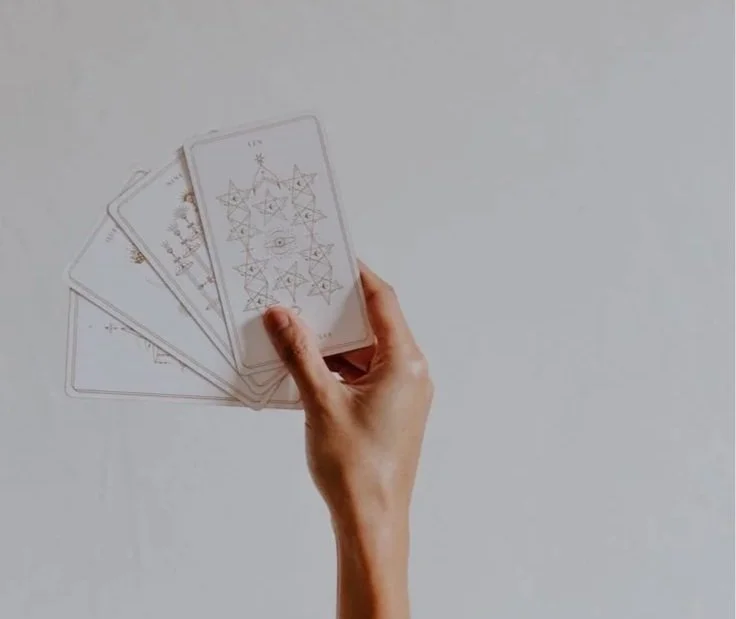
A Tarot reading uses a deck of cards whose imagery, symbolism, and traditional associations provide a framework for interpreting a question. The most commonly used Tarot system contains 78 cards divided into the Major Arcana and Minor Arcana, with each card carrying established themes that contribute to the broader interpretation. Readers consider the cards selected, their positions within a spread, and the relationships between them to develop an understanding of the subject being examined.
The Major Arcana is generally associated with significant themes, transitions, and experiences, while the Minor Arcana explores a wide range of emotional, practical, intellectual, and interpersonal circumstances. Within the Minor Arcana, the four suits provide additional symbolic structure through their associations with different areas of experience. Card numbers, court figures, imagery, and the arrangement of the spread all contribute to the interpretation.
I work primarily with the Rider-Waite-Smith tradition, which offers a rich visual and symbolic language developed through generations of Tarot practice. Familiarity with those traditional meanings is essential to my work, but I don't approach each card as though it provides a complete answer independently of the others. Its significance develops through the question, the position it occupies, the surrounding cards, and any intuitive information emerging alongside it.
An experienced Tarot reader may identify nuances within a spread that are difficult to appreciate when individual cards are interpreted exclusively through their most familiar keywords. A card traditionally associated with partnership may indicate an emotional connection, for example, but its appearance doesn't automatically establish that the people involved are capable of building a sustainable relationship. The broader spread may introduce limitations, conflicting intentions, or circumstances that fundamentally change what that connection can become.
Why Tarot Card Meanings Require Context
Let's consider the Two of Cups, a card commonly associated with attraction, mutual affection, emotional exchange, and partnership. Someone unfamiliar with the nuances of Tarot might interpret its appearance in a love reading as confirmation that two people will end up together. The symbolism certainly warrants consideration of an emotional connection, but the conclusion depends upon considerably more than the presence of one favorable card.
Imagine that the surrounding cards suggest exhaustion, inconsistent behavior, unresolved obligations, or resistance to commitment. The Two of Cups may still describe genuine affection, but the remaining spread could indicate significant limitations surrounding how that affection is expressed. A reader who announces an inevitable romantic outcome without examining those complications risks giving the client a misleading interpretation of the situation.
The position of a card also matters. A Two of Cups appearing in an outcome position may invite a different interpretation from the same card appearing as an obstacle, an underlying influence, or something the client hopes to experience. Established Tarot symbolism provides the vocabulary, but the reader must still understand how the various elements contribute to the question being examined.
This is why I don't regard memorizing card meanings as sufficient preparation for interpreting complicated situations professionally. The work involves recognizing how apparently contradictory influences may coexist and understanding what those combinations suggest about the possibilities being explored. Sometimes the most significant information comes from the relationship between several cards rather than from any one card considered in isolation.
Can a Tarot Reader Also Be Psychic?
Absolutely. Many Tarot readers incorporate intuitive impressions into their interpretations, just as some psychic practitioners use Tarot to organize or further examine the information they perceive. The methods are not mutually exclusive, and the presence of a Tarot deck doesn't mean the reader has stopped working psychically.
However, not every Tarot reader identifies as psychic, and not every psychic uses Tarot. Some practitioners work primarily through traditional card symbolism, established interpretive techniques, and the relationships between positions within a spread. Others emphasize psychic perception, using the cards as one component of a broader intuitive process.
Neither approach should be dismissed simply because it differs from another practitioner's methodology. A thoughtful traditional Tarot reader may offer a nuanced interpretation without claiming extrasensory abilities, while an intuitive reader may draw upon both established symbolism and personal psychic impressions. The quality of the work depends upon how competently the practitioner uses their chosen method and communicates its limitations.
My own approach combines claircognizant psychic perception with Tarot because I've found the methods useful together throughout my professional experience. Intuitive information may emerge before a card is drawn, become more specific through a particular combination, or encourage me to consider a traditional card meaning from a different perspective. The cards provide structure, but I don't require them to be the sole source of every impression included in the reading.
For a more detailed explanation of how I work, I've written a separate article on What Is an Intuitive Tarot Reading? How My Readings Actually Work. It examines the relationship between my claircognizant perception, traditional Tarot interpretation, and the methods I use to explore client questions.
Psychic Reading vs. Tarot Reading: Which Is More Accurate?
This is probably the most common question surrounding the distinction, and it deserves a more careful answer than suggesting that one method is universally more accurate than the other. Neither psychic perception nor Tarot has established scientific reliability for predicting specific future events or independently verifying another person's private thoughts. Claims of accuracy therefore need to be understood within the context of interpretation, individual experience, and the limitations of the method.
Within a reading, I consider accuracy in relation to how specifically and coherently the interpretation addresses the circumstances, whether relevant distinctions have been recognized, and whether the information remains useful when considered alongside what the client actually knows. I'm also interested in the difference between recognizing a potential development and assuming that development is the most likely outcome. A reading should acknowledge the influences that could support or complicate a possibility rather than treating every intuitive impression as a guaranteed prediction.
Consider someone asking whether a romantic interest intends to pursue a committed relationship. A reader might perceive attraction and emotional investment, but those impressions alone don't establish that the person has the practical availability or willingness to act upon them. The question of whether a relationship can develop requires consideration of additional circumstances, including established behavior and the choices both people are prepared to make.
This is where clients can be particularly vulnerable to interpretations that sound definitive but overlook essential context. Being told that someone loves you may feel reassuring, especially when the relationship has been inconsistent or disappointing. However, that reassurance becomes considerably less useful if the person repeatedly demonstrates that they cannot offer a partnership compatible with your needs.
I would rather explain the limitations surrounding a favorable possibility than offer a confident prediction that disregards them. The distinction between something being possible and having persuasive reasons to expect it is an important part of responsible interpretation. Neither Tarot nor psychic perception provides a scientifically validated numerical probability, but careful consideration of the circumstances can prevent a possibility from being presented as certainty.
Why Discernment Matters More Than the Method
In my experience, one of the greatest challenges in relationship readings is recognizing that apparently contradictory circumstances can coexist. Someone may feel genuine affection while behaving inconsistently, express serious intentions while remaining unavailable, or return to an established connection without developing the capacity to sustain it differently. Those distinctions can be uncomfortable because people understandably want a clearer answer about whether the relationship will work.
A reader who concentrates exclusively on favorable impressions may overlook the practical limitations surrounding a connection. Equally, someone who interprets every difficult card as evidence that the relationship is doomed may disregard genuine possibilities for growth or meaningful change. The responsibility lies in considering the information as comprehensively as the chosen method allows and communicating uncertainty where it exists.
The same principle applies outside romantic relationships. A professional opportunity may appear promising while involving risks the client needs to examine, and a significant personal decision may offer meaningful potential without guaranteeing a particular result. An interpretation becomes more useful when it accounts for the circumstances that could influence the outcome instead of presenting a single possibility as an established fact.
Discernment also requires recognizing where the client's own expectations may be influencing how the situation is understood. Perhaps she's become convinced that a man's withdrawal indicates fear of his feelings, or that a promising business conversation guarantees an eventual agreement. I want enough room within the reading to consider those assumptions without automatically adopting them as explanations.
My responsibility is to communicate what I'm receiving, distinguish the influences that appear relevant, and avoid manufacturing certainty simply because a client is emotionally invested in one outcome. Your responsibility remains evaluating the interpretation alongside the information available through your own experience. That relationship between insight and personal judgment is considerably more important to me than whether the information arrived through Tarot symbolism or claircognizant perception.
Does a Psychic Reading Predict the Future Differently From Tarot?
Both psychic readings and Tarot can be used to explore potential future developments, although individual practitioners approach prediction differently. Some readers concentrate on specific events and timelines, while others emphasize the circumstances, choices, and patterns that appear likely to influence what happens next. My approach incorporates potential outcomes, but I don't regard the future as a fixed sequence of events that remains unaffected by human decisions.
I generally focus on a predictive horizon of approximately twelve months because circumstances can become increasingly difficult to interpret meaningfully as decisions, relationships, and external influences continue developing. That is a boundary I've established within my own practice rather than a universal rule governing all psychic or Tarot readings. It reflects my preference for examining possibilities within a period where the relevant circumstances can be discussed with greater specificity.
Free will is also central to how I interpret potential outcomes. A person may experience strong feelings and choose not to act upon them, just as someone who currently appears unavailable may make different decisions as their circumstances change. The possibility of a particular development doesn't eliminate the influence of future choices or guarantee that the people involved will behave according to what seems most likely at the time of the reading.
I also don't believe clients benefit from organizing their lives around waiting for a prediction to materialize. If you're considering whether to remain involved with someone, accept an opportunity, or make a significant change, your decision should reflect what is actually available to you. An intuitive interpretation may introduce another perspective, but it shouldn't become a reason to disregard present circumstances indefinitely.
Should You Choose a Psychic Reading or a Tarot Reading for Love?
If you're asking about a romantic connection, either method can provide a framework for exploring the circumstances, depending upon the practitioner's approach. Tarot offers an established symbolic structure through which relationship patterns, emotional influences, and potential developments can be interpreted. Psychic readings may focus more directly on intuitive impressions concerning the connection, although readers who combine the methods may incorporate both perspectives.
I work with clients who want to know whether an ex is likely to return, what someone may be feeling, whether a relationship has meaningful potential, or why a particular romantic dynamic keeps repeating. Those are legitimate questions, and I don't believe every inquiry about another person's intentions needs to be transformed into a general lesson about self-improvement. Sometimes you want to know whether Michael is coming back, and I see no reason to pretend you've booked a reading to discuss your childhood when that isn't what you came to ask.
At the same time, I won't ignore significant information simply because it complicates the original question. If an intuitive impression suggests potential contact but the broader circumstances indicate substantial problems with commitment or reciprocity, those influences deserve consideration. The purpose is to examine the relationship comprehensively enough that you can distinguish what someone may feel from what they're prepared to offer.
If you have one specific question, a written Tarot reading can be a practical starting point. If the situation involves several people, interconnected concerns, or follow-up questions you're likely to want to explore immediately, a live psychic session may offer a more suitable experience. Those choices concern the scope and structure of the reading rather than any universal claim that one method is superior for romantic questions.
Psychic vs. Tarot: Does the Delivery Format Matter?
There's another distinction that can become confusing when comparing psychic readings and Tarot readings: the method used to interpret the question isn't necessarily the same thing as the format in which the reading is delivered. A Tarot reading can be provided in writing, through a private audio recording, or as part of a live conversation. Likewise, a psychic practitioner may work through different formats depending upon their abilities, services, and preferred approach.
My live private sessions take place by phone and allow us to discuss the circumstances as the reading develops. That conversational structure can be particularly useful when several connected questions need attention or when something emerges that deserves clarification. I work claircognizantly and incorporate Tarot and additional intuitive interpretation as appropriate to the inquiry.
My written Tarot readings are designed around one focused question, with different card counts available depending upon the desired depth. Each reading includes traditional Tarot interpretation and relevant intuitive insight, delivered in a personalized PDF that you can revisit afterward. Audio Tarot readings offer another option for someone who prefers hearing the interpretation but doesn't need a live conversation.
Choosing between those formats depends upon how you prefer to receive information and how much room the question requires. A complicated situation may benefit from an interactive session, while a contained inquiry can often be explored through a carefully prepared written interpretation. The scope of the question should guide the format rather than the assumption that a longer or more expensive service must necessarily produce a better answer.
For additional guidance, my article on How to Prepare for a Psychic or Tarot Reading explains how to frame a useful question, provide relevant context, and approach the experience with realistic expectations.
What Should You Look for in a Psychic or Tarot Reader?
Before choosing a reader, I'd recommend paying attention to how they explain their methodology and the expectations they establish about the information they'll provide. A practitioner should be capable of describing what their readings involve, which formats they offer, and how they approach uncertainty or questions concerning another person's decisions. Experience can be valuable, but longevity alone doesn't establish that every interpretation will be correct.
Consider whether the reader makes room for complexity or consistently promises definitive answers to circumstances involving substantial uncertainty. Someone who guarantees that your ex will return, your relationship will succeed, or a professional opportunity will materialize may be offering considerably more certainty than the method can responsibly support. I would be especially cautious about readers who encourage repeated purchases by suggesting that your future depends upon obtaining another prediction.
It's also worth examining whether the reader respects your ability to make decisions independently. A useful reading may challenge assumptions, identify possibilities, or introduce information you hadn't considered, but it shouldn't require you to surrender your judgment. The relationship between reader and client should support discernment rather than create dependence.
You should also be able to ask directly about practical details, including question limits, delivery times, pricing, and whether the consultation involves live interaction. Those considerations may seem less interesting than discussing psychic abilities, but they influence the experience you're actually purchasing. Clarity about the service is an entirely reasonable expectation when you're investing in someone's professional work.
Explore My Psychic and Intuitive Tarot Readings
If you've been comparing psychic and Tarot readings because there's a particular situation you want to understand, you can explore the options available through my Private Psychic & Tarot Readings.
My work combines more than 25 years of professional experience with claircognizant perception, Tarot, and energetic interpretation. I examine the question you're bringing, the dynamics influencing the circumstances, and the possibilities worth considering as you decide how to proceed. You can choose a live phone session when you'd prefer real-time discussion or an asynchronous reading when you want to receive the interpretation privately and revisit it later.
For one focused question, my Written Intuitive Tarot Readings offer an accessible starting point, with one-, three-, five-, and ten-card options depending upon how extensively you want the situation examined. If you're bringing several interconnected questions or prefer a conversation, the live sessions provide more flexibility to explore what emerges.
I don't regard the purpose of a reading as persuading you that I've acquired greater authority over your circumstances than you possess yourself. My work is to offer a thoughtful, direct interpretation of what I'm receiving and explain the distinctions that matter. You remain responsible for deciding what to do with that perspective.
The Difference That Actually Matters Is the Quality of the Interpretation
There's an understandable desire to identify the method that will finally eliminate uncertainty, particularly when a relationship, decision, or unresolved situation has become emotionally consuming. You may hope that choosing a psychic instead of a Tarot reader, or vice versa, will produce the definitive answer that previous conversations and observations haven't provided. The appeal is obvious because certainty promises relief from having to consider possibilities you'd rather not confront.
But the presence of a Tarot deck doesn't guarantee a nuanced interpretation, just as an intuitive impression doesn't become unquestionable simply because someone describes it as psychic information. Both approaches depend upon the practitioner's methodology, experience, judgment, and willingness to acknowledge limitations. The most useful reading is one that examines the circumstances carefully enough to distinguish an appealing possibility from the conditions required to support it.
In a romantic relationship, that may mean recognizing affection while also acknowledging substantial limitations surrounding commitment. In a professional decision, it may involve identifying promising developments without disregarding practical risks. And sometimes it means recognizing that the answer you're hoping to receive carries more emotional significance than the evidence available to support it.
You can appreciate intuitive insight, engage thoughtfully with Tarot symbolism, and remain open to perspectives that extend beyond your initial interpretation. You can also question what you're being told, consider the circumstances you already know, and make decisions that reflect your own priorities. Those forms of discernment belong in the same conversation.
The most important distinction isn't whether someone needs a Tarot deck to access intuitive information. It's whether the person interpreting that information can recognize what it actually suggests without turning your hope for a particular outcome into a promise they have no business making.
